I am beginning to see the Dream as an entity seeking dialogue. Dreams are collaborative educational offerings on the language of the Unconscious; they are lessons in Underworld literacy and evidence that the Dark wants to talk to us.
Dreams are the landscapes between consciousness and the Unconscious; image as personalized metaphor. This is also how I see pictures. Photography can be a form of waking dreaming; an engagement with image that invites communication with the Unconscious. Art and Dreams have this in common, they are borderlands where we learn to live more intentional lives.
Over the past 9 months of studying Jungian and Archetypal theory, I have been paying close attention to dreams. My collection, ranging from 1989 (the first dream I remember at 4 years old) right up to this week, has shown me how important dreams are when entering into relationship with the Unconscious. James Hillman’s The Dream and the Underworld was a life-changing experience for me (read my initial review of it HERE) and my dreamwork echoes the reverence and autonomy Hillman gives to dream images. This essay is an glimpse into how I work with dreams and the potent insights they offer us if we are willing to give them our attention.
The Dream
We are at a community hall in town. I can’t find Bane. He is wearing his red hoodie and a white undershirt, so I try to look for these colors in the crowd. I call him but he’s nowhere to be found. Then I am wandering town looking for him, calling his name. I keep seeing kids in the streets but none of them are Bane. Finally, I find him and tell him to stay with me. Elle is with me, then I realize we are in Kay’s yard and I duck into a low alcove outside the house to hide because I don’t want to run into her. It has a window that is half rolled down. Elle and I jump in to hide but Bane stays in the yard. Kay pulls up to the house in a truck and rolls the window up in the alcove so now, Elle and I are stuck in there. There is a doorway that leads to the house and instead of trying to sneak away and avoid Kay, I decide to just bang on the door and explain myself and tell her I’m looking for Bane (who is gone again). Banging on the door does nothing so I smash the widow so we can get out but this somehow lands in inside the house. Kay hears the smash and asks what we are doing and I explain everything, apologize for the window and tell her to send me the bill for repair. I now have to get through the house to get outside and Kay has piles of light blue jeans all over the stairs. Her clean laundry is piled everywhere. I trip over a mound of jeans but I’m too concerned for Bane to worry about disturbing the clothes and I exit the house. I continue calling for Bane. I see a kid in a red sweater with Mommer (Bane’s watermelon stuffy) but it’s not Bane. I chase this kid down and taking Mommer, I ask the kid where he found it and he tells me he found it in a field somewhere. Elle is with me again, and I tell her we should go to her house and get her car to look for Bane. We have walked all over town and it’s just too slow and I’m so worried for him.
Elle drags out a kind of bike thing with two parts for us to ride and I’m annoyed that she didn’t just get her car, but I get on my part and we attach them together and continue our search. The bike breaks apart and Elle and I separate. She goes down an ally and I search the front, waiting for her to come back, anxious to find Bane. It’s taking so long, so I go down the ally and see the backyards behind are full of water. Then Elle walks into sight, holding a drenched bane. He is unconscious but he is breathing. She hands him to me, and tells me she found him in the water. I hold his soaked body, realizing he’s wearing a different color than he was when I lost him – a blue hoody with black shirt and white undershirt. I cry and cry from relief, never wanting to let him go.
I wake up crying.
Working with the Images
Psychologist Stephen Aizenstat talks of his approach to dreamwork in his book Dream Tending. Dream tending is a technique reminiscent of C.G. Jung’s active imagination, in which we go into the dream situation, or inquire of the dream images while awake. I used this technique with Bane image, as my personal associations and feeling affects were too close and strong in order for me to clearly see what Bane might symbolize in the dreamworld.
I close my eyes and imagine holding the drenched unconscious Bane image. What does he need? How can I make him more comfortable (tending)? I light a fire to warm him, and hold him close. He needs to warm up and regain his vitality. He wakes up and looks at me suspiciously. I sense discomfort and anger, so I let go of him. He walks over to the other side of the fire, glaring at me. I ask what his name is, because I know this image is not my waking world son.
Bane image is my Passion. He is angry at me. He wants to know why I left him. I tell him that I couldn’t find him, that he wandered off. But this explanation is insufficient for him. He reminds me that I am the parent. I am the one in charge. I should have been attending to him.
I ask him what he needs. Comfort. I remember that I have Mommer, and give the watermelon stuffy to him. Passion softens, but he’s still upset. If Passion is anything like waking Bane, he won’t let me off the hook that easily. I want to hold him, but he doesn’t want me to touch him – just like Bane when he’s angry. I feel lost. I don’t know what to do to heal this relationship. I tell him I’m sorry. I tell him he’s right. I should have paid closer attention. I’m here now. I’ll stay with him. I don’t know what else to do but just sit with him by the fire.
This image brings up a lot of emotion because sometimes I feel at a loss with waking world Bane as well – like he is slipping away from me and I don’t know what to do or how to connect with him anymore. He seems so different than me, so foreign. This emotional affect is important to the symbol of the image in the dream. It is why Unconscious used Bane to communicate this lost part of myself. Passion is a part of me that has slipped away, that feels distant and inaccessible. Yet it is a part of me that is incredibly important. I need it to survive.
Kay is a former friend and fellow artist with whom I had a falling out. Our friendship and processes became unhealthy and enmeshed and I began to distance myself from her, due to feelings of unsafety in our friendship (everytime I disagreed with her she would accuse me of being jealous or competitive). Her reactivity resulted in me feeling that I could not be honest with her, and that I was required to shrink as to not trigger her, yet these dynamics were not the reason that I distanced myself; she was also having an affair that I was privy too, and I could no longer hold that secret for her and continue to hang out with her husband and children. It felt dishonest and icky to me.
Our friendship was complex, and I by no means handled it well. I was a coward and because I was afraid of her reactivity, I never told her the truth about how I felt about her affair or how it affected our friendship. In fact, I avoided it completely, allowing her to believe our falling out was due to different creative trajectories. This shrunken version of myself was a Sasha devoid of fire, of passion, as illustrated by my dream ego’s attempt to hide from Kay – reflecting my waking life cowardice and dishonesty. In an unconscious attempt to avoid confrontation with her, I lost something precious to me, symbolized by losing Bane again when I realized we was in her yard. The stacks of clean laundry that I knock down in her house might be her carefully crafted persona, the symbolism saying that I no longer feel morally obligated to hold her secrets. The dream offers that Passion is more important than avoiding conflict, a realization that took almost two years to make its way into my conscious grasp.
Another layer of the Kay image is in the affect of avoidance itself. Kay is something I do not want to approach, a common motif in dreams that illustrate unconscious contents, showing me that this image is also a container for personal shadow qualities. This means that Kay image has a duplicitous meaning. Not only does the image stand for our waking world friendship that initiated another loss of Passion, she is an illustration of my own shadow qualities. Because digging into this aspect of Kay image would make this post longer than I would like, I will expand on these themes in more depth in a future essay.
Elle is an acquaintance that I have very few associations with, other than I have witnessed her yell at her kids a few times. I really do not know this person in the waking world. As yelling at her kids is the only association I can drawn upon, Elle might represent ‘the bad mother’, a mother whose passion comes out in the form of anger at her children. As my partner in searching for Bane in the dream, Elle might be symbolic of my means of accessing Passion. The bike with two parts Elle brings for us to look for Bane might represent the split aspects of Mother. Elle image holds the shadow qualities of mother in me, while my dream ego represents the positive mother qualities. It is no coincidence that Elle is the one who retrieves Bane from the water of unconsciousness in the dream. Passion is accessed by me in the form of bad mothering; when I yell or lose my calm with my kids. Elle possesses only a watered down Passion, an unconscious Passion that is not capable of expressing himself in fullness. Here Unconscious sheds light on my primary means of accessing Passion, allowing me to reflect on how I might nurture Passion in other areas of my life, such as adult relationships and creative work.
Mommer is Bane’s watermelon stuffy. It is actually a heating pad – which is significant for the exploration of this dream image. As heating pad, Mommer is the warmth that revives Passion, reflected in the fire that I light during dream tending. The fire, though it wakes up Passion, does not soften him. Mommer is the eros (I use this term in the traditional Jungian sense) connectivity that Passion needs, a comforting symbol of maternal love.
An important aspect of dream images is that though they may reflect waking world realities, they are also symbols for different parts of the dreamer; they are our inner wildlife. Like Hillman, I believe the goal of dreamwork is to resist ‘interpretation’ and instead, marinate in the possible associations, amplifications, and analogies the dream images evoke. To do this, we might observe them, allowing inquiry and curiosity to guide us in how we interact with them consciously. Dream images are internal wildlife that speak a specific and personalized metaphor. Insight arises naturally when we handle them with respect.
Exit Music
This dream still makes me emotional, a telltale sign it is still working on me. I will never forget the flood of relief and joy that I felt when Elle handed me an unconscious, but alive Bane. The depth of feeling this image evokes tells me how important this part of me is, and how lost I have been without it. The difficulty in working with dream images of people we are close to in waking life is that it becomes increasingly hard to see outside a literal interpretation. For weeks afterward, I was worried about what this dream might mean in regards to my literal waking life son. But most of the time, the dream is symbolic. Jung (1989) tells us that the Unconscious speaks a language of high rhetoric (pg. 178), which means dream images tend to the highly metaphorical. Dreams are like poetry, metaphor wrapped in familiar garb. Aizenstat’s Dream tending approach enabled me to bypass the emotional charge invoked by Bane as image, and to ask the image directly what the dream was trying to communicate to me by using my son as symbol.
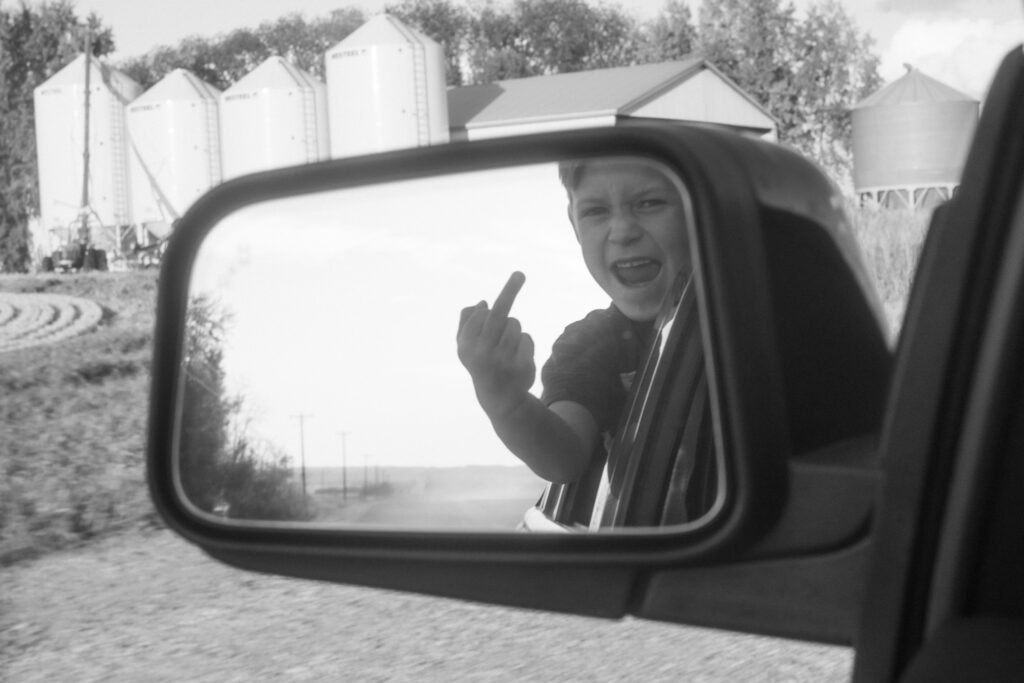
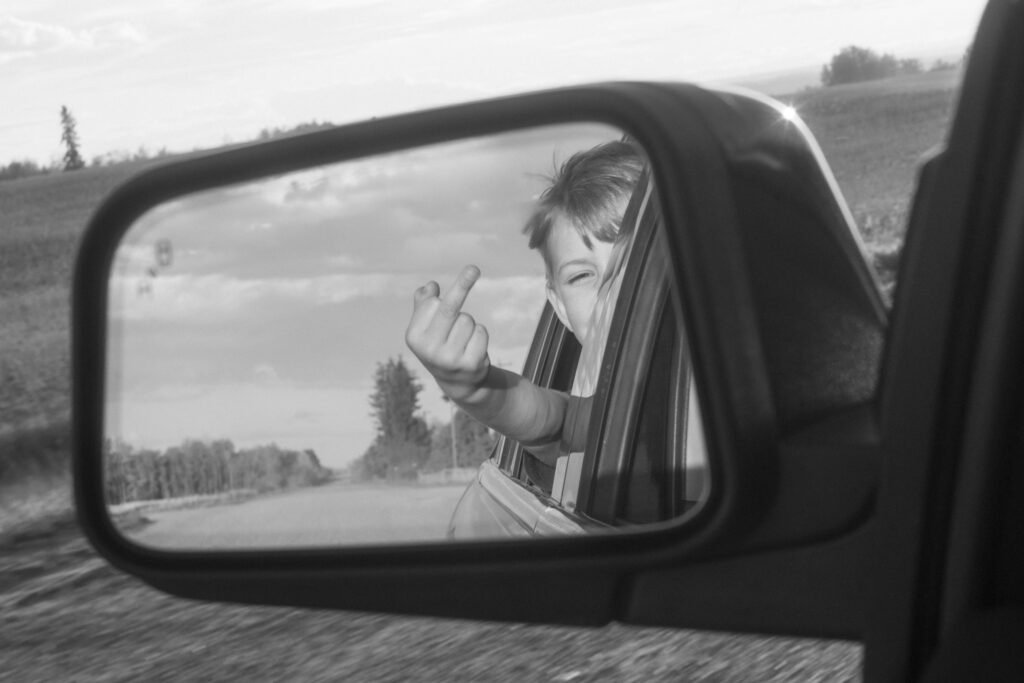
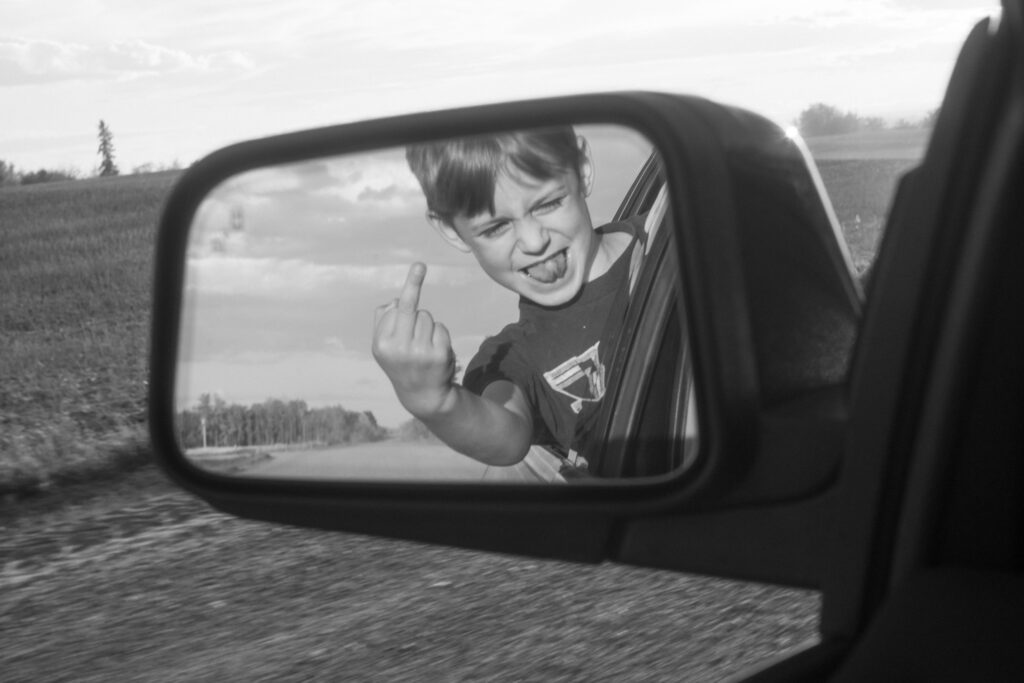
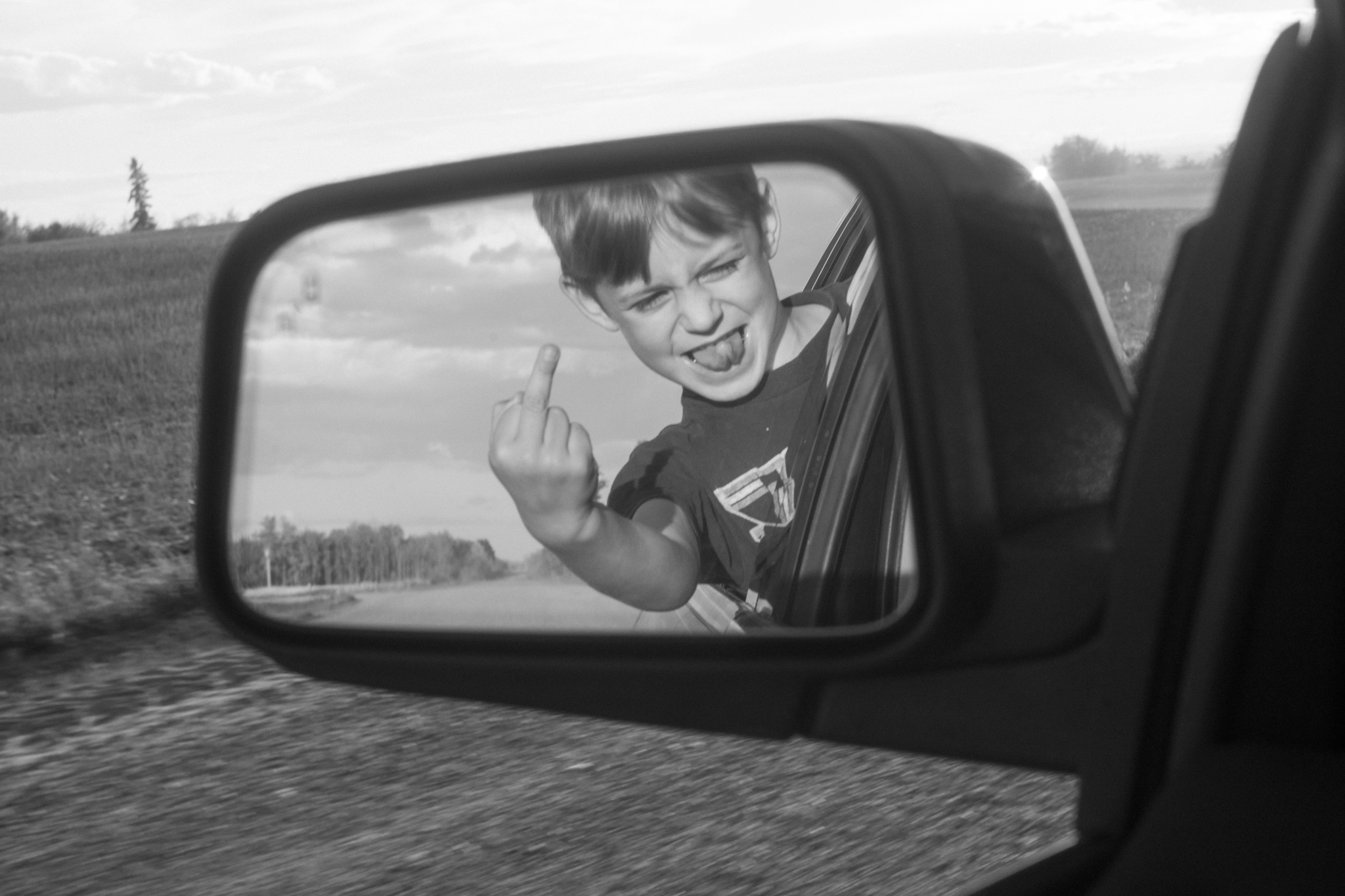
So what does the image symbolize? I think about this in terms of photography. I love these pictures of my son because they encapsulates his passionate nature. As speaking to his passion, the image reflects not only an aspect of him, but a newly reclaimed aspect of me, retrieved and revived from the Unconscious. The picture becomes a tangible symbol of a shared quality – expressed differently in him than in me – that connects us. In this light, the photograph becomes an alchemical artifact that bridges mind and matter.
PS: Happy Birthday waking world Passion Image. Good God I love you.
